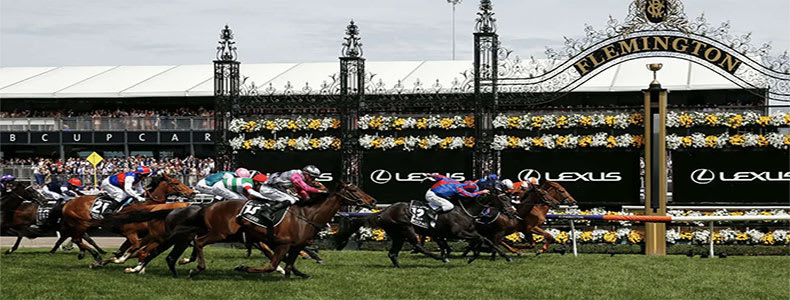
In case you are ever in one of those pubs where they play trivia games for free drinks or other prizes, or you go on the Jeopardy game show and one of the categories is Melbourne Cup Trivia, here is some Melbourne Cup trivia to get buzzed in the pub or make money on Jeopardy - Melbourne Cup Betting
Let’s have Melbourne Cup Trivia for $600 and hope we discover the Daily Double and have money to burn on the wager…
Question: This horse won the 1969 Caulfield Cup and was heavily backed to win the Melbourne Cup and complete a rare Cups Double.
Answer: Big Philou !
More Melbourne Cup Trivia
The winner of the first two Melbourne Cups, Archer, was supposedly walked from his barn at Nowra, an 850-kilometre stroll, to Flemington for the race.
True or False?
False. While it makes a good story, Archer got to Flemington in style, arriving on a steamship named City of Sydney with trainer Etienne de Mestre and two other horses, Exeter and Inheritor.
Other sources claim the steamboat was named City of Melbourne.
Interstate rivalry between Victoria and NSW officially began when NSW went from territory to state in 1901.
Unofficially, it began in 1851.
That was the year Victoria was carved out of NSW and declared the Colony of Victoria.





Our First Melbourne Cup Winner? Archer
The next day after winning that first Melbourne Cup, Archer won the Melbourne Town Plate over the same distance.
Archer won the Melbourne Cup again in 1862 by 10 lengths, carrying a bag weighted with 10 stones and two one-pound smaller rocks.
That old Imperial weight system has gone away. Ten stone, two pounds, Archer’s official allotment for the 1862 Melbourne Cup, converts to 64.4 kg, give or take a few pebbles.
The 1863 Melbourne Cup had only Seven Runners
Many horses were scratched to show solidarity with Archer’s being prevented from taking part because his entry was not submitted before the deadline.
It is likely, given that he won by 10 lengths, he would have been a good tip to win in 1863, which would have meant that Makybe Diva’s three wins from 2003 – 2005 would have tied, not set, a record.;
Youngest Jockey to Ride a Melbourne Cup Winner was Peter St. Albans
He was a week away from his 13th birthday when he won the 1876 Cup aboard Briseis. The stated minimum age for jockeys at the time was 13.
St. Albans had a VRC Spring Carnival to remember. He rode Briseis to the win at the Saturday meeting prior to the Melbourne Cup, winning the VRC Derby. The pair won the VRC Oaks two days after the Melbourne Cup, and then posted a second in the VRC Mares’ Produce Stakes at the next Saturday meeting.
Briseis was killed at stud in 1879 when she reared and fell over backwards.
She was to be served by King Of The Ring and the breeders had hobbled her, which apparently was too kinky for her tastes.
1882 – First Licensed Bookies at Flemington
Note the use of the word licensed. There were bookies at the first Melbourne Cup and just about anywhere else where sports and racing were contested.
There were bookies when Noah built the Ark.
Would it Float? $2.25 on.
Would God really destroy the Earth by flood? Earth $101, God $1.08.
Would two of everything make it onto the Ark?
No matter. At least two bookies got on.
There were bookies when the first wheel came along and the bet was 6/1 that a horse pulling a wheeled wagon could move 10 stone and five quicker than a man dragging a wheel-less sled could.
Realising the risky proposition they were offering, the bookies made the market a free bonus bet and slapped a 15x turnover on it.
1890 Melbourne Cup Winner Carbine
Carbine holds the record for top-weight in the race. He carried 66 kg. and beat a field of 38 other horses. The second-placed finisher in the race had a 24 kg. weight advantage.
Carbine covered the two miles in 3:28.25, fastest in the history of the race to that time. Acrasia won the race in 1904 and equaled Carbine’s time. Blue Spec broke the record the following year, running 3:27.5.
1906 – Poseidon
Poseidon was the first horse to win the Cups Double by winning the Caulfield Cup and the Melbourne Cup in 1906. Ten other horses have matched the feat.
Here’s the most trivial of the trivial.
Only seven horses have won the Cox Plate and the Melbourne Cup in the same year.
1919 – Artilleryman
The 1919 win by Artilleryman must have been a heady one for a nation dealing with the cessation of fighting in WWI on a day just over a week ahead of the war’s official end with the signing of the Treaty of Versailles.
1932 & 1934 – Peter Pan
Peter Pan was the only horse in the history of the race to win twice in non-consecutive years. He was unable to run the race in 1933 due to a virus that had infected many of the horses in Sydney’s stable.
A sick horse is not so trivial, at least not to us, but Peter Pan was within a flu shot of being a three-time Melbourne Cup winner. Close as Archer.
1942 – 1945 World War II
The Melbourne Cup was run on Saturdays for four years.
1948 – First Use of Photo Finish Camera
Rimfire was declared the winner. Dark Marne was second. Pictures don’t lie, or do they? Many of those on the course thought it was Dark Marne that should have been the winner.
1993 – First International Raider
Vintage Crop, an Irish horse, was the first from the northern hemisphere to win the race.
Bart Cummings – 1965 – 2008
Bart Cummings notched his 12th and last Melbourne Cup win in 2008 when Viewed was the winner. Cummings passed away in 2015. Etienne de Mestre had five winners, but he is most assuredly not a record threat. Lee Freedman also has five, but needs seven to catch Cummings.
Lee Freedman – 2005
Lee Freedman, looking to gain an edge for his horse Makybe Diva, implied that if the Flemington turf was not softened to accommodate her preferred running conditions, he would not race her in the attempt to win a third Melbourne Cup.
The stewards caved. The track was watered. She won on Soft 5. Her 2003 win was at Good 4. The 2005 win was Soft 5. Most of her major wins came on Soft or Heavy tracks. Her 2005 Cox Plate win was on Soft 7.
2015 – Michelle Payne First Woman to Win
No one would have given her much of a chance. Prince Of Penzance was an average horse, at best.
1981 – 2017 Lloyd Williams
Lloyd Williams holds the record for Melbourne Cup wins with six, beginning with 1981 (Just A Dash), 1985 (What A Nuisance), 2007 (Efficient), 2012 (Green Moon), 2016 (Almandin), 2017 (Rekindling).
Find below other interesting Melbourne Cup trivia and facts about the great race.
MELBOURNE CUP ATTENDANCES:
- 2023 - 84,492
- 2022 - 73,816
- 2021 - 10,000 due to Virus Pandemic
- 2020 - No attendance due to Virus Pandemic
- 2019 - 81,408
- 2018 - 83,471
- 2017 - 90,536
- 2016 - 97,479
- 2015 - 101,015
- 2014 - 100,794
- 2013 - 104,169
- 2012 - 106,162
- 2011 - 105,979
- 2010 - 110,223
- 2009 - 102,000
- 2008 - 107,000
- 2007 - 102,411
- 2006 - 106,691
- 2005 - 106,479
- 2004 - 98,181
- 2003 - 122,736 (record)
MELBOURNE CUP RACE RECORD:
- Kingston Rule 1990 - 3 minutes 16.3 seconds
BIGGEST WINNING MARGINS:
- 8 lengths - Archer 1862 / Rain Lover 1968
MELBOURNE CUP BY WEIGHT WINNERS
- 53kgs - 9 wins
- 54.5kgs - 8 wins
- 52.5kgs - 8 wins
- 56kgs - 7 wins
HIGHEST WINNING WEIGHT:
- 10st 5 lb (66.0 kg) Carbine (1890)
- 10st 2 lb (64.5 kg) Archer (1862)
- 10st 0 lb (63.5 kg) Poitrel(1920)
LOWEST WINNING WEIGHT:
- 1863 33.5kg, Banker
HIGHEST WEIGHT CARRIED:
- 10st 10lb (68 kg) Phar Lap and lost
- The most popular weight carried is 52.5kg and 53kg with eight wins each, followed by 47, 48, 51, and 56kgs each with seven wins
AGE OF WINNERS:
- 3 year old - 24
- 4 year old - 45
- 5 year old - 44
- 6 year old - 36
- 7 year old - 11
- 8 year old - 3
- The last three-year-old to win the Cup was Skipton in 1941
SEX OF WINNERS:
- Entire 73
- Gelding 54
- Colts 19
- Mares 14
- Fillies 3
SHORTEST PRICED FAVOURITES:
- 8/11 Phar Lap (1st 1930)
SHORTEST PRICED WINNING FAVOURITES:
- 8/11 Phar Lap (1st 1930)
- 7/4 Revnue (1908)
- 2/1 Archer (1862)
FAVOURITES RECORD:
- 32 favourites (19.8%) have won the Melbourne Cup
- 74 Cup favourites have finished in the first three placings
- Fiorente (2013) was the last favourite to win for punters
LONGEST PRICED WINNERS:
- The Pearl 100/1 (1871)
- Wotan 100/1 (1936)
- Old Rowley 100/1 (1940)
- Rimfire 80/1 (1948)
- Prince Of Penzance 100/1 (2015)
- The longest priced winners in the last 35 years was Viewed at 40/1 in 2008, then Tawrific in 1989 starting at 30/1 and Prince Of Penzance in 2015
BETTING ODDS
- 10/1 - 16 Times
- 8/1 - 14 Times
DUAL WINNERS:
- Archer 1861 - 1862
- Peter Pan 1932 - 1934
- Rain Lover 1968 - 1969
- Think Big 1974 - 1975
TRIPLE WINNERS:
- Makybe Diva 2003- 2005
SMALLEST FIELD:
- 7 starters 1863
LARGEST FIELD
- 39 starters in 1890
SUCCESSFUL JOCKEYS 4 WINS EACH:
- Bobbie Lewis: The Victory 1902, Patrobas 1915, Artilleryman 1919 & Trivalve 1927
- Harry White: Think Big 1974 and 1975, Arwon 1978 and Hyperno 1979. Harry White also holds a unique record of two Melbourne Cup doubles
FEMALE JOCKEYS:
- First female jockey to ride in the Cup was New Zealander Maree Lyndon on Argonaut Style in 1987, she ran second last out of 21
- Clare Lindop was the first Australian female to ride in the Cup when unplaced on Debben in 2003
- Michelle Paine is the first and only female to win the Melbourne Cup when she beat Mac Dynamite in 2015 on the 100/1 shot Prince Of Penzance
FATHER AND SON COMBINATION:
- Billy and Peter Cook are the only father-son combination to win the Melbourne Cup. Billy Cook (Father) winning the Cup 2 times in 1941 on Skipton and 1945 on Rainbird and Peter (Son) winning in 1981 on Just A Dash
JOCKEYS COLOURS:
- 17 cup winning jockeys have worn black as their main colour. Last being George Podmore on Evening Peal in 1956
- Navy blue and royal blue with 14 wins
WINNERS OF THE CUP DOUBLES, MELBOURNE CUP / CAULFIELD CUP (12):
- Poseidon 1906
- The Trump 1937
- Rivette 1939
- Rising Fast 1954
- Even Stevens 1962
- Galilee 1966
- Gurner's Lane 1982
- Let's Elope1991
- Doriemus 1995
- Might and Power 1997
- Ethereal 2001
- Without A Fight 2023
WINNING BARRIERS:
- Barriers 5 & 14 with 8 winners
- Barriers 10 & 19 with 7 winners
- Barrier 11 with 6 winners
- Barriers 1, 4, 6, 8 & 17 with 5 winners
- Since the barrier stalls were first used in the Cup in 1924, no horse has won the race from barrier 18
- In the year 1924, the winner Backwood started from barrier 7. In the 85 years since, Makybe Diva is the only other winner starting from that barrier winning in 2004
MOST WINNING NUMBER:
- No 4 with 13 wins
- No 12 with 11 wins
- No 1 with 11 wins
- No 6 with 10 wins
- No's 8 & 5 with 8 wins
- No's 2 & 11 with 7 wins
Makybe Diva winning in 2005 wearing no.1. The last horse carrying no.1 prior to that was Rising Fast in 1954.
TRAINER WITH MOST WINS:
- Bart Cummings 12 wins (1965, 1966, 1967, 1974, 1975, 1977, 1979, 1990, 1991, 1996, 1999, 2008)
- Etienne de Mestre 5 wins (1861, 1862, 1867, 1877, 1878)
- Lee Freedman 5 wins (1989, 1992, 1995, 2004, 2005)
- Bart trained his first Melbourne Cup winner in 1965 with four year old mare Light Fingers. He last won the race in 2008 with Viewed, his 50th Anniversary of his first Cup runner
- Bart Cummings Father Jim Cummings trained one Cup winner, Comic Court in 1950
- Sheila Laxon in 2001, trainer Ethereal, was the first woman trainer to officially win the Melbourne Cup
- 1938 Melbourne Cup was won by trainer Mrs. Allan McDonald who trained Catalogue. Mrs McDonald was a New Zealand trainer but at that time women were not allowed to compete as trainers in Australia so the record books have her husband down as the official trainer
MOST WINS BY AN OWNER:
- John Tait 4 Wins (1866, 1868, 1871, 1872)
- Etienne de Mestre 4 Wins (1861, 1862, 1867, 1878)
- Dato Tan Chin Nam 4 Wins (1974, 1975, 1996, 2008)
- Lloyd Williams 7 Wins (1981, 1985, 2007, 2012, 2016, 2017, 2020)
PRIZE MONEY:
- Melbourne Cup in 1861 was $1,420
- Melbourne Cup in 2005 was $5.1 million
- Melbourne Cup in 2009 is $5.65 million
- Melbourne Cup in 2010 is $6 million plus trophies to celebrate th 150th running of the race
- Melbourne Cup in 2011 is $6.16 million plus trophies
- Melbourne Cup in 2012 is 6.20 million
- Melbourne Cup in 2013 is 6.20 million
- Melbourne Cup in 2014 is 6.20 million
- Melbourne Cup in 2015 is 6.20 million
- Melbourne Cup in 2016 is 6.20 million
- Melbourne Cup in 2017 is 6.20 million
- Melbourne Cup in 2018 is 7.30 million
- Melbourne Cup in 2019 is 8.00 milllion
- Melbourne Cup in 2020 is 8.00 million
- Melbourne Cup in 2021 is 8.00 million
- Melbourne Cup in 2022 is 8.00 million
- Melbourne Cup in 2023 is 8.41 million
- In 1985 the race reached $1 million dollars in prize money for the first time (won by What A Nuisance)
MELBOURNE CUP POSTPONED DUE TO RAIN:
- 1870 when the track was so waterlogged that it was deemed unsafe to ride. Won by Nimblefoot a week later
- 1916 track agained deemed unsafe due to rain. Cup won by Sasanof 5 days later
- 1892 The Cup was run in pouring rain and won by Glenloth
- Rain during the race on average happens once in every nine years

MELBOURNE CUP TROPHY FACTS:
- 1861 - The trophy took the form of a "hand beaten" gold watch
- 1865 - The first year a trophy was awarded. Silver bowl on a stand with a narrow neck with two ornate handles topped with a horse and rider
- 1867 - A silver trophy from England displays 'Alexander Taming the Horse
- 1868 - 1875 No mention of trophy presented
- 1876 - The first gold cup trophy manufactured in Victoria
- 1877 - 1886 No trophy presented
- 1887 - Dunlop A golden horse-shoe mounted on a plush stand and valued at 100 sovereigns
- 1888 - Three silver horses on a silver plated base
- 1889 - The silver "tea and coffee service" reputed to have been unacceptable as a trophy
- 1890 - A silver ewer, salver and tazzas are representative of this magnificent trophy
- 1891 - A trophy measuring two feet in length and fifteen inches high of a draped figure of Victory, standing on a pedestal holding out an olive wreath to a jockey upon his horse
- 1893 - Multi-piece trophy of silver tankard, punch bowl and beakers
- 1894 - 1898 Trophies were not presented as the economic depression engulfed the nation
- 1900 - A tea and coffee service was presented
- 1908 - Three feet long plaque of an embossed silver galloping horse resembling a greyhound. Much ridicule
- 1909 - Two handled silver cups
- 1913 - Silver epergne
- 1914 - This was the last year the Melbourne Cup Trophy was made in England
- 1915 - A large rose bowl that was made in Australia
- 1916 - The first gold cup is presented
- 1918 - Two handled gold cup trophy
- 1919 - James Steeth's three handled "loving cup" first introduced
- 1922 - The Melbourne Cup trophy valued at 200 pounds
- 1953 - The Melbourne Cup trophy valued at 550 pounds
- 1960 - The Melbourne Cup trophy valued at 750 pounds
- 1973 - The Melbourne Cup trophy valued at $3000
- 1978 - The Melbourne Cup trophy valued at $9000
- 1984 - The Melbourne Cup trophy valued at $23 000
- 1987 - The Melbourne Cup trophy valued at $32 000
- 1999 - The Melbourne Cup trophy valued at $32 500
- 2000 - The Melbourne Cup trophy valued at $32 500
- 2001 - The Melbourne Cup trophy valued at $80 000. The Cup moves from 9ct to 18ct gold. Valued at $80,000
- 2005 - The breeder of the Cup winner will be presented with a Melbourne Cup ½ sized Cup
- 2006 - The Melbourne Cup trophy valued at $100 000
- 2008 - The Melbourne Cup trophy valued at $125 000
- 2010 - The Cup has been remodelled on the trophy won by Phar Lap in 1930 and is valued at $150,000
- 2023 - The Melbourne Cup trophy valued at $250 000
- The Cup is made up of 34 pieces of hand-beaten eighteen carat gold and a lathe-produced base
- Every year the Melbourne Cup trophy is awarded as a prize
TAB DIVIDENDS:
- Record trifectas dividend on the Melbourne Cup - $61,867.90 in 1993
- 2009 punters across the country splurged on Tuesday's Melbourne Cup with a record $95.6 million outlaid on the Victorian and New South Wales TABs
- Average spend per person is approximately $8.50, of which $7.30 is returned in dividends
- The prize money for the first Cup in 1861 was 1,420 Pounds
MORE MELBOURNE CUP TRIVIA:
- The youngest jockey to win was Peter St. Albans in 1876 on Briseis aged 13 (officially), but actually 12 years 11 months 23 days
- The Melbourne Cup was first filmed in 1896
- The first radio broadcast of the Melbourne Cup was made by the Australian Broadcasting Company in 1925
- The photo finish camera was first used in the 1948 Melbourne Cup
- Dunaden wins the Cup in 2011 from Red Cadeaux in the closest finish ever in Cup history
- Most runs by a horse in the Cup was Shadow King, from 1929 to 1935 who made six attempts to win the cup in seven years . He ran 6th, 3rd, 2nd, 3rd, 2nd and 4th
- Subzero and 5 other grey horses have won the Melbourne Cup
- World Wars I and II stopped most major races in Australia, but not the Melbourne Cup.
- The Melbourne Cup is also a Greyhound Race and is also held in November.
- Jockeys in Victoria must have blood-alcohol readings under 0.02.
- The phrase The Race That Stops A Nation is a trademark of the Victoria Racing Club.
- Great trivia question: What Australian sporting event did Russia win in 1946? The Melbourne Cup. Russia was a horse. He won by three lengths.
- In Australia in any given year, there is approximately 32,000 active racehorses. Over half of them have never won a race.
- Phar Lap's heart was 6.2kg. The average horse heart weighs 3.2 kg.
- Oldest winner 8yo, Toryboy in 1865 & Catalogue in 1938.
![[object Object] Logo](https://images.progroupracing.com.au/f_auto,q_auto/v1/production/products/uploads/photo/315x140-Neds.20200126145832.png)
![[object Object] Logo](https://images.progroupracing.com.au/f_auto,q_auto/v1/production/products/uploads/photo/315x140-Ladbrokes.20200126150324.png)
![[object Object] Logo](https://images.progroupracing.com.au/f_auto,q_auto/v1/production/products/uploads/photo/315x140-bet365.20200126145200.png)
![[object Object] Logo](https://images.progroupracing.com.au/f_auto,q_auto/v1/production/products/uploads/photo/315x140-Beter-PGR.20230707092034.20230818094247.png)